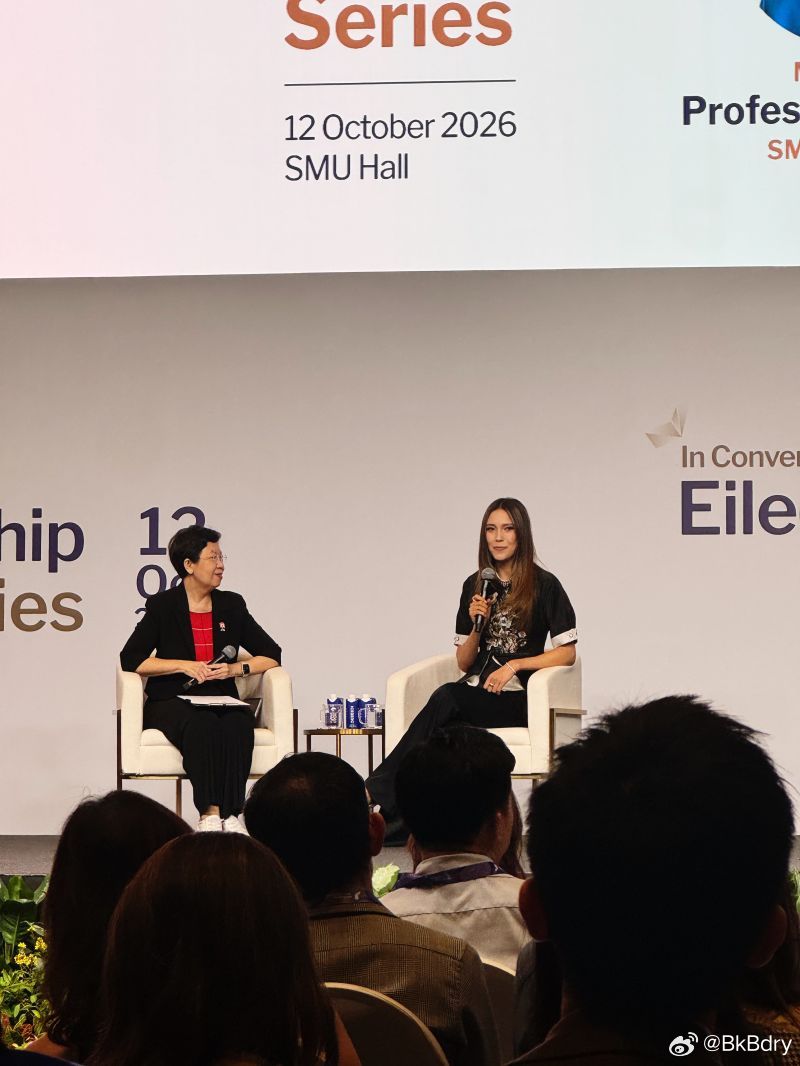
谷的luck 谷爱凌在新加坡管理大学的对谈,陆续有人写感言了,这个帖子不错:
Be your own fish. You can be a pretty fish. You can be a shiny fish. You can be a little fish. You can be a vegetarian fish.”“做你自己的一条鱼吧。你可以是一条漂亮的鱼,也可以是一条闪闪发光的鱼,甚至还可以是一条小一点的鱼。当然,你也可以是一条素食鱼。”That last bit cracked me up at Eileen Gu’s fireside chat at SMU earlier today! 今天在 SMU 与谷爱凌的炉边谈话中,最后那部分内容真的让我笑得不行了! Eileen Gu needs no introduction.谷爱凌无需做介绍,大家都很熟悉她。And I think that’s why her influence extends far beyond young girls and aspiring athletes, to students, working professionals and even curious parents like myself about the upbringing that helped shape her success.我认为,正是因为这个原因,她的影响力远远超出了年轻女孩和有志成为运动员的孩子们的范围,而是惠及了学生、在职专业人士,甚至像我这样的对成长经历感兴趣的父母们。正是这些成长经历,共同成就了她的成功。
A few takeaways that stayed with me: 有一些要点让我印象深刻:
👶🏻 𝗢𝗻 𝗵𝗲𝗿 𝘂𝗽𝗯𝗿𝗶𝗻𝗴𝗶𝗻𝗴 𝗮𝗻𝗱 𝘁𝗵𝗲 𝗿𝗼𝗹𝗲 𝗼𝗳 𝗵𝗲𝗿 𝗺𝗼𝗺This was one I was particularly curious about, especially as a parent myself!Eileen shared how her mother exposed her to just about everything growing up. From skiing, ballet, basketball, piano, archery, science camps, you name it!“When I was young, she gave me the choices, and then when I was a little bit older, she gave me the freedom to make the choice.”It got me thinking about how we raise our own children. Should we encourage them to try as many things as possible before finding their passion? Or is there value in specialising early?团结一致,共同奋斗,实现美好的未来。让我们携手努力,共创辉煌的明天。 这是我特别感兴趣的一个话题,尤其是作为家长的我来说! 艾琳分享说,她的母亲在她的成长过程中让她接触了各种各样的活动。从滑雪、芭蕾舞、篮球、钢琴、射箭,到科学夏令营等等,母亲几乎让女儿尝试了所有的事情。 “在我年轻时,她为我做出了选择;而当我稍微长大一些后,她又给了我自由去做出自己的决定。” 这让我思考如何培养自己的孩子。我们应该鼓励他们在找到自己的兴趣之前尝试尽可能多的东西呢,还是应该让他们尽早专注于某个领域呢?
🧠 𝗢𝗻 𝗻𝗲𝘂𝗿𝗼𝗽𝗹𝗮𝘀𝘁𝗶𝗰𝗶𝘁𝘆 𝗮𝗻𝗱 𝗽𝘂𝘀𝗵𝗶𝗻𝗴 𝗼𝘂𝗿 𝗯𝗼𝘂𝗻𝗱𝗮𝗿𝗶𝗲𝘀“Almost every boundary is somewhat plastic.”Eileen spoke about how she trains her mind to become comfortable with discomfort. Every new trick she attempts means pushing past a physical, mental or emotional boundary.What I found interesting was her emphasis on self-awareness. Understanding what fear, doubt and pressure feel like, and learning how to navigate them.这个领域的研究与探索充满了挑战与机遇。 “几乎每一个边界都具有一定的可塑性。” 爱凌讲述了她如何训练自己的思维,让身体能够适应不适感。她尝试的每一个新技巧,都意味着要突破身体、心理或情感上的界限。 我觉得有趣的是,她强调了自我意识的重要性。了解恐惧、疑虑和压力的本质,并学会如何应对它们。
🤖 𝗢𝗻 𝗔𝗜 𝗮𝗻𝗱 𝗵𝘂𝗺𝗮𝗻 𝗽𝗼𝘁𝗲𝗻𝘁𝗶𝗮𝗹With so much debate about whether AI is making us think less, I liked Eileen’s take on how it could actually make us better thinkers.She compared AI to tech advancements in skiing, where safer training equipment has allowed athletes to attempt bigger tricks and push the boundaries of what’s possible.Similarly, AI could help us become more curious, ask better questions and achieve more.But as she put it, “Fundamentally, the work of getting to know oneself will always remain your own.”Technology can help us do more, but it can’t decide who we want to become.在这个充满挑战与机遇的时代,让我们携手共进,共同创造美好的未来吧。 关于人工智能是否让我们思考的方式变得更少,一直有很多争论。不过,艾琳的观点让我觉得,人工智能实际上可能让我们成为更优秀的思考者。 她将人工智能与滑雪领域的技术进步进行了比较,指出更安全的训练设备使得运动员能够尝试更复杂的动作,从而突破极限。 同样,人工智能也能帮助我们变得更加好奇,提出更好的问题,从而实现更多的成就。 但正如她所说:“从根本上来说,了解自我的过程始终属于你自己。” 技术可以帮助我们做更多的事情,但它无法决定我们想要成为什么样的人。
🐟 𝗢𝗻 𝗯𝗲𝗶𝗻𝗴 𝘆𝗼𝘂𝗿 𝗼𝘄𝗻 𝗳𝗶𝘀𝗵!We’ve all heard the saying about being a big fish in a small pond or a small fish in a big pond.But Eileen challenged us to stop comparing ourselves to the other fish altogether!She spoke about how women can sometimes feel there’s only room for one of them at the table, when in reality, success doesn’t have to come at someone else’s expense.Rather than competing to be the biggest fish, why not focus on what makes us different and the unique value we bring?And finally, when asked what kind of ecosystem would help the next generation succeed, Eileen highlighted four things:Mutual respect, curiosity, resilience and community.幸运的幸运儿,好运连连! 我们都听说过“小池塘里的大鱼”或“大池塘里的小鱼”这样的说法。 但是爱凌激励我们不要再将自己的行为与别的鱼进行比较了! 她谈到,有时候女性会觉得在团队中只能有一个人得到机会,但实际上,成功并不需要以牺牲他人的利益为代价来取得。 与其竞争谁是最强大的,不如专注于我们的独特之处以及我们所带来的独特价值。 最后,当被问到什么样的生态系统能够帮助下一代取得成功时,爱凌提到了四件事情: 相互尊重、好奇心、适应能力以及社区意识。